
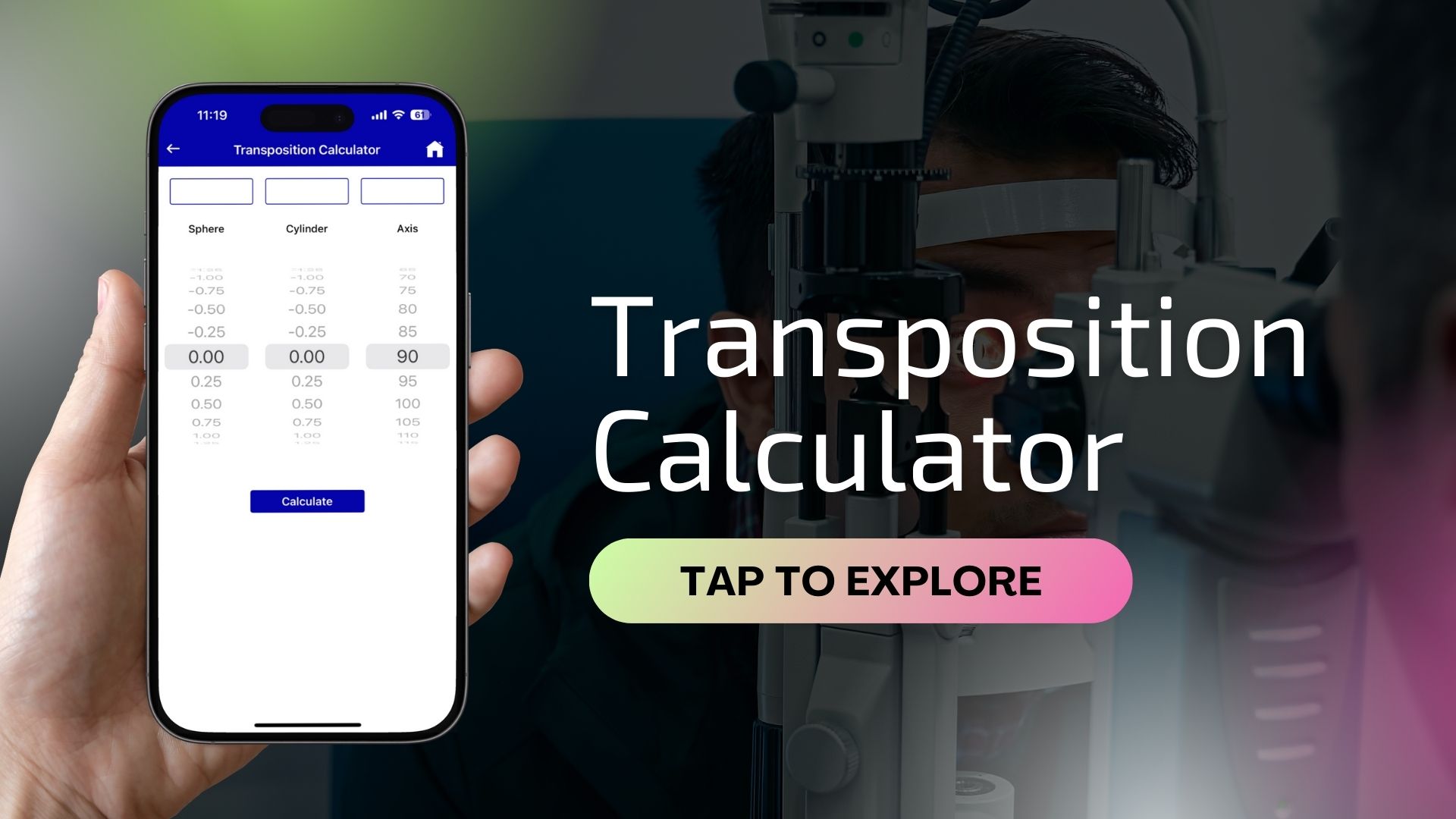
Transposition Calculator

transposition-calculator mobile test image

Comprehensive Overview of Transposition Calculator

In optometry, transposition refers to the process of converting prescriptions from one form to another (e.g., from plus-cylinder to minus-cylinder format). This tool helps you transpose your sphere and cylinder values for the correct lens prescription.

Features

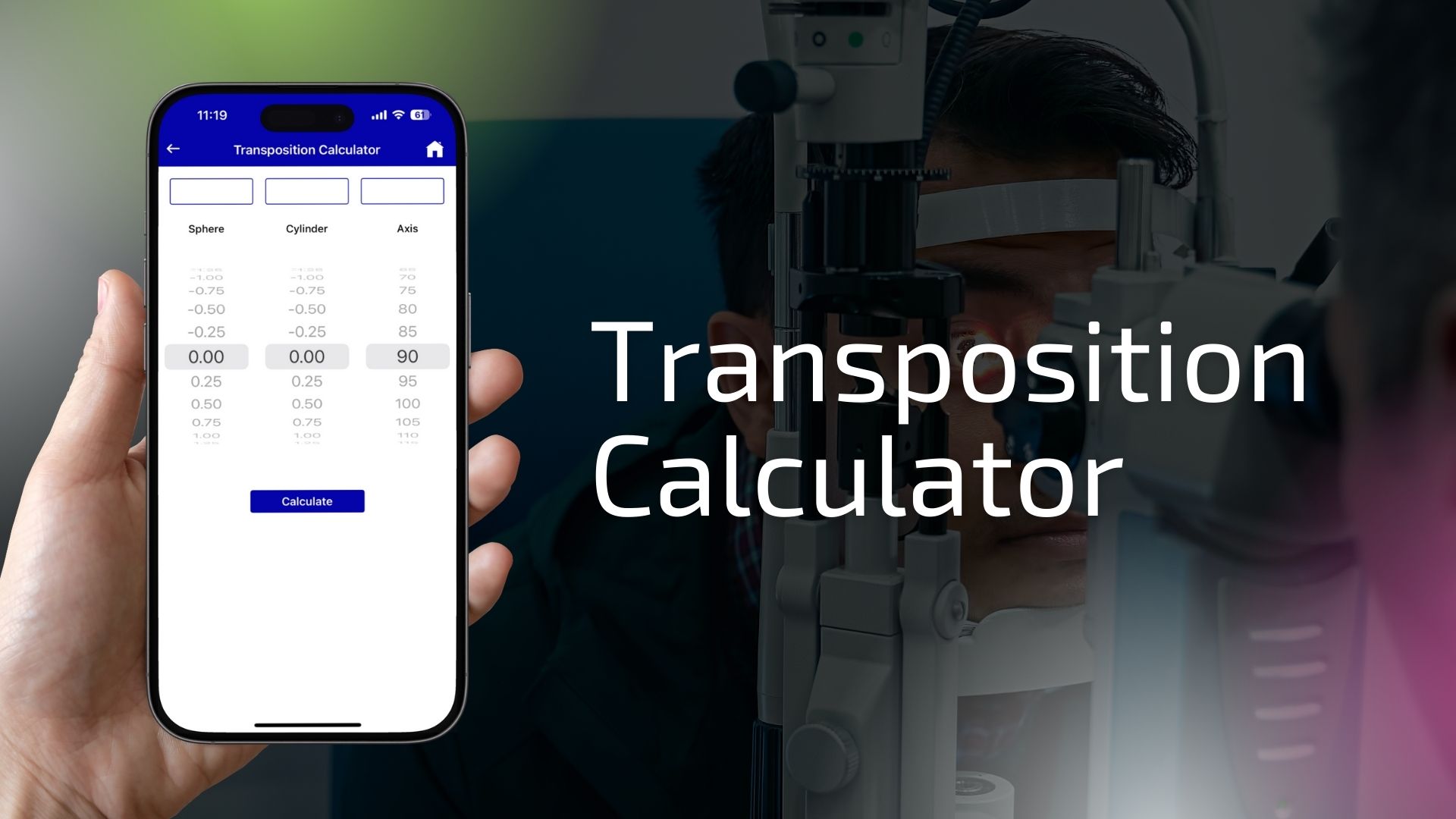
  • Convert between plus and minus cylinder prescriptions
  • Supports sphere (SPH), cylinder (CYL), and axis
  • Easy-to-use interface for quick results
  • View both converted prescription and original prescription

How to Use the Transposition Eye Calculator

  1. Enter Your Prescription - Input your sphere, cylinder, and axis values (e.g., SPH: -2.00, CYL: -1.50, Axis: 90).
  2. Choose Conversion Type - Select whether you're converting from plus to minus cylinder or minus to plus cylinder.
  3. View Transposed Prescription - The tool will instantly show you the converted values.
  4. Copy or Save Your Prescription - Copy your new prescription to share with your optician or save it for future reference.

How to Use the Calculator

  1. Enter the Diopter value (e.g., 43.00 D).
  2. The calculator will display the Radius of Curvature in millimeters.

Examples

Example 1:
Input: 43.00 D
Calculation: 337.5 / 43.00 = 7.85 mm
Output: 7.85 mm
Example 2:
Input: 45.00 D
Calculation: 337.5 / 45.00 = 7.50 mm
Output: 7.50 mm

Why This Conversion Matters

  • Contact lens fitting – Match lens curvature to the cornea.
  • Keratometry – Converts measured power to curvature.
  • Optical design – Helps in designing corrective lenses.
  • Vision correction planning – Used in surgeries like LASIK.

Interpretation of Results

  • Steep Curvature: High diopters (e.g., 47.00 D) → Smaller radius (e.g., 7.18 mm)
  • Flat Curvature: Low diopters (e.g., 40.00 D) → Larger radius (e.g., 8.44 mm)

Who Uses This Calculator?

  • Optometrists
  • Ophthalmologists
  • Contact lens fitters
  • Optical engineers
  • Vision science students

Final Notes

  • Make sure the diopter value is based on a refractive index of 1.3375.
  • Values below 36 D or above 50 D may indicate abnormal curvature.
  • This tool is a clinical aid, not a diagnostic device.