Scan QR code to download the
application.
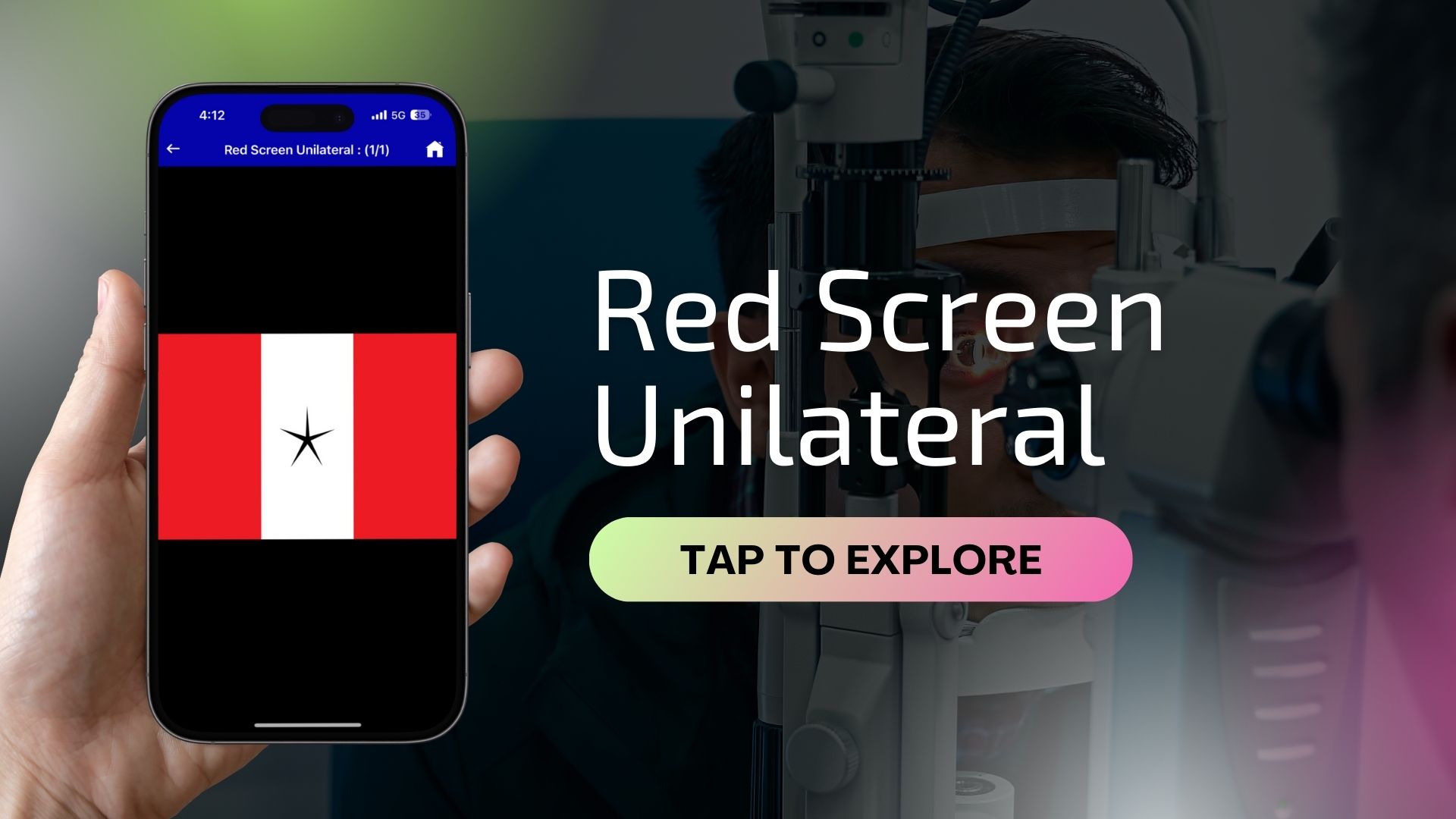
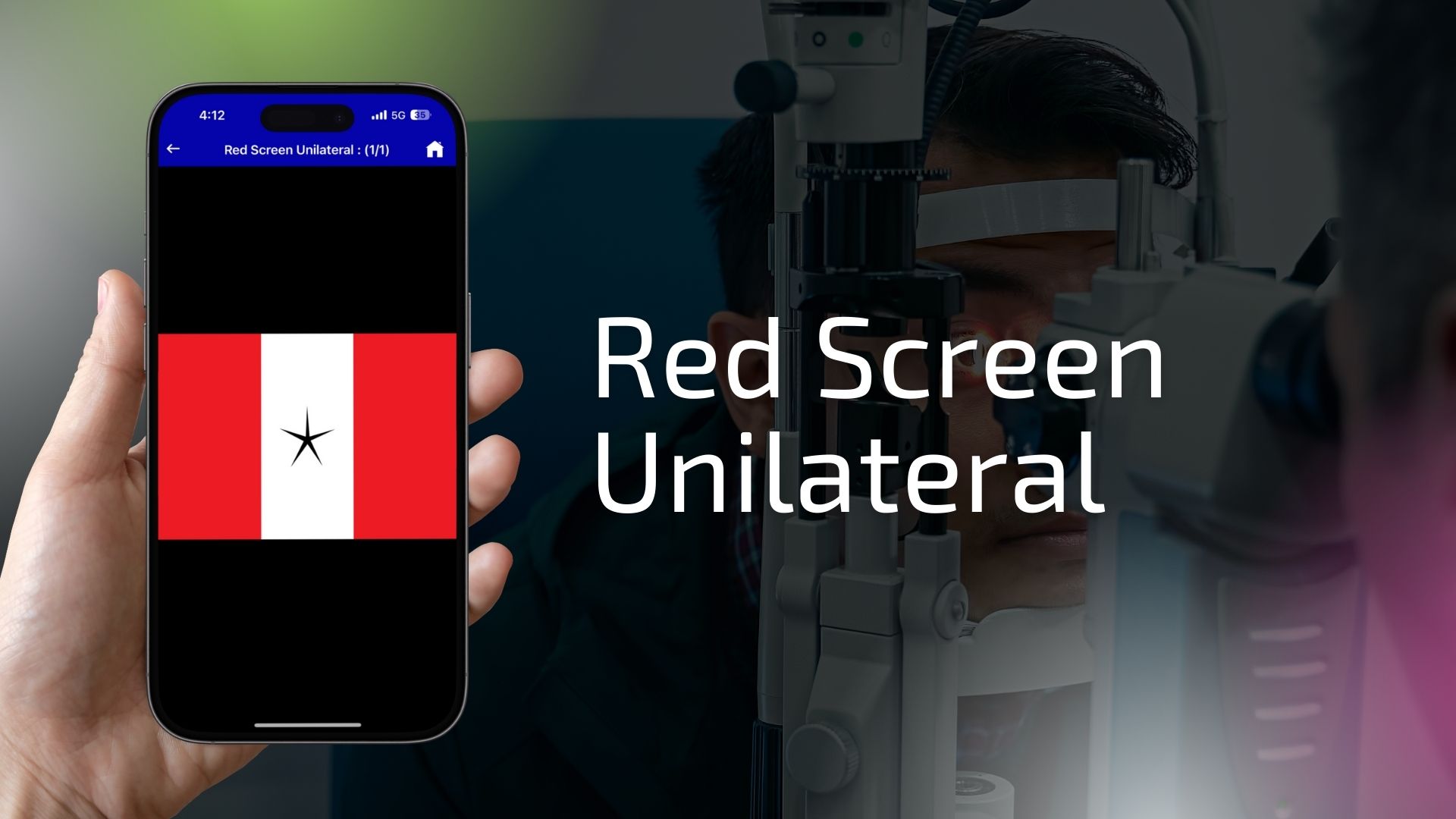
Red Screen Unilateral Test
The Red Screen Unilateral Test is a method used to evaluate
each eye individually.
It helps assess important visual functions like sharpness of
sight and color recognition.
By isolating one eye at a time, the test provides a clear
picture of its capabilities.
This isolation is crucial for detecting asymmetries in
vision between the two eyes.
It is commonly used in both routine eye exams and diagnostic
evaluations.
Visual acuity is measured to determine how clearly each eye
can see details.
Color perception is tested to identify any deficiencies or
abnormalities.
Such detailed analysis can reveal issues like amblyopia or
optic nerve problems.
The test results help eye care professionals tailor
treatments more effectively.
Overall, it’s a simple yet powerful way to understand
individual eye function.
Purpose of the Test
- Assess Visual Acuity:
Determine how
clearly each eye can see and distinguish details,
especially those presented in red.
- Evaluate Color
Perception: Identify any
issues with red color perception, which can indicate
color vision deficiencies.
- Detect Visual Deficiencies: Look for
signs of amblyopia (lazy eye), strabismus (eye
misalignment), or other visual disorders.
Setup
- Environment: Conduct the test in a
well-lit room to ensure the red targets are clearly
visible against a neutral background.
- Equipment:
- Red-Colored Target or Screen:
May include red
letters, numbers, or shapes.
- Visual Acuity Charts or
Patterns in Red: For
assessing detail recognition and contrast
sensitivity.
- Occluder or Eye Patch: To cover
one eye while
testing the other.
Procedure
1. Initial Instructions:
Explain the test to the patient or their guardian. Make sure
they understand that one eye will be tested at a time.
2. Testing Each Eye:
- Cover One Eye: Use an
occluder or eye
patch to cover one eye while testing the other.
- Present the Red
Target: Show the red
target or visual chart to the uncovered eye. The target
might include:
- Red Letters or Numbers: For
visual acuity
assessment.
- Red Patterns or Shapes: To
evaluate contrast
sensitivity and shape recognition.
- Response: Ask the
patient to identify
or describe what they see. Record their responses and
performance.
- Repeat for the Other
Eye: Switch the
occluder to test the other eye in the same manner.
Evaluation Criteria
- Visual Acuity: Compare
the ability to
recognize red letters or shapes between the two eyes.
Significant differences may indicate visual
impairment.
- Color Perception:
Evaluate how well
each eye perceives and differentiates red from the
background. Note any abnormalities or color vision
deficiencies.
- Fixation and Tracking: Observe if the
patient can maintain focus on the red target and track
it if it moves.
Interpretation of Results
- Normal Results: Both eyes should
demonstrate similar levels of visual acuity and red
color perception. The patient should accurately identify
red targets or patterns.
- Abnormal Results: Differences between
the eyes in visual acuity, color perception, or fixation
ability may suggest visual disorders such as amblyopia
or strabismus.
Follow-Up
- Further Evaluation: If
abnormalities
are detected, additional tests by an ophthalmologist or
optometrist may be necessary to diagnose and address any
underlying conditions.
- Treatment or Intervention: Based on the
results, appropriate treatment may include corrective
lenses, eye exercises, or other therapies.
The Red Screen Unilateral Test is a valuable diagnostic tool
for assessing visual function in each eye individually,
especially in cases where detailed or complex visual
assessments are challenging.