Scan QR code to download the
application.
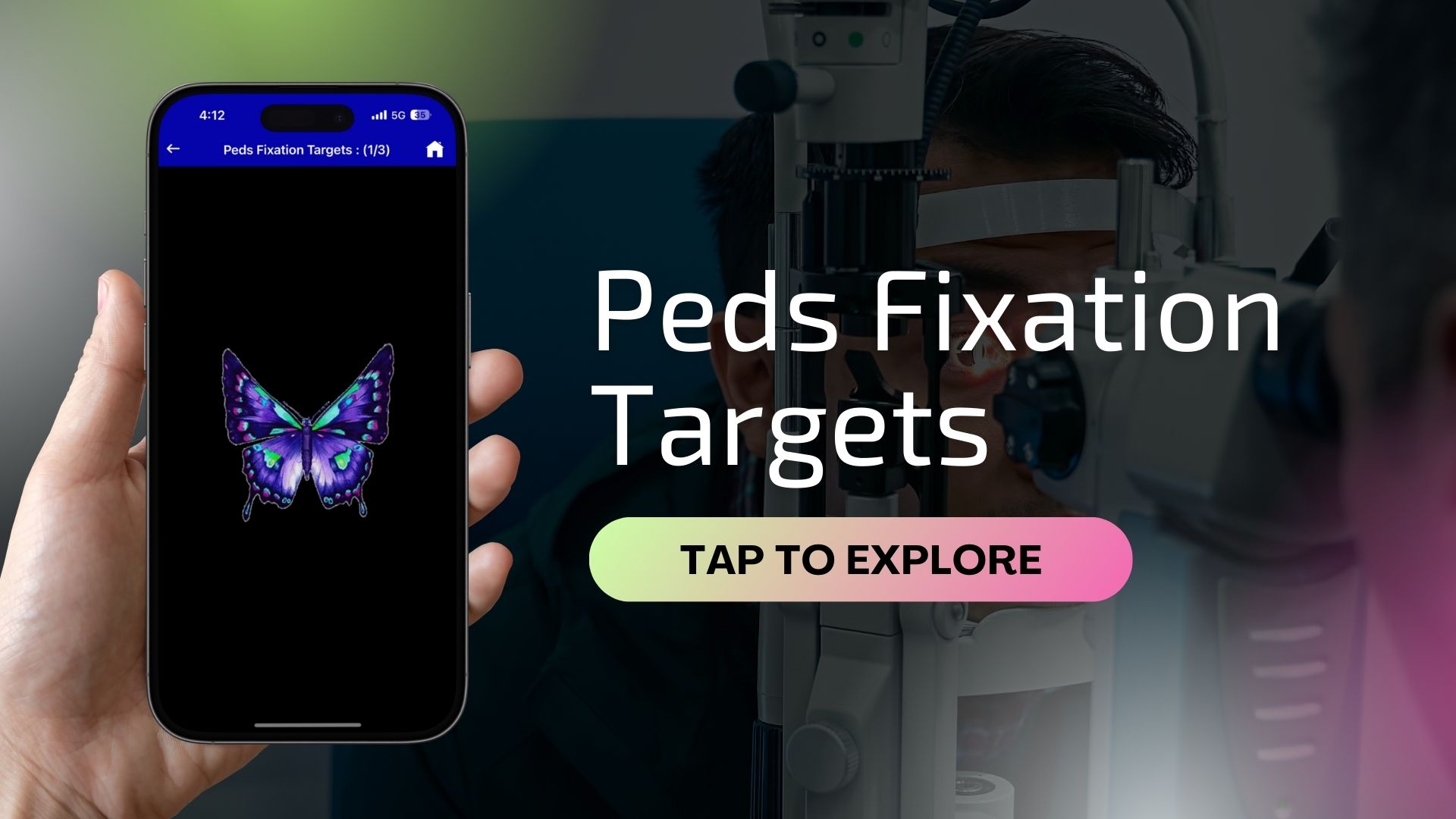
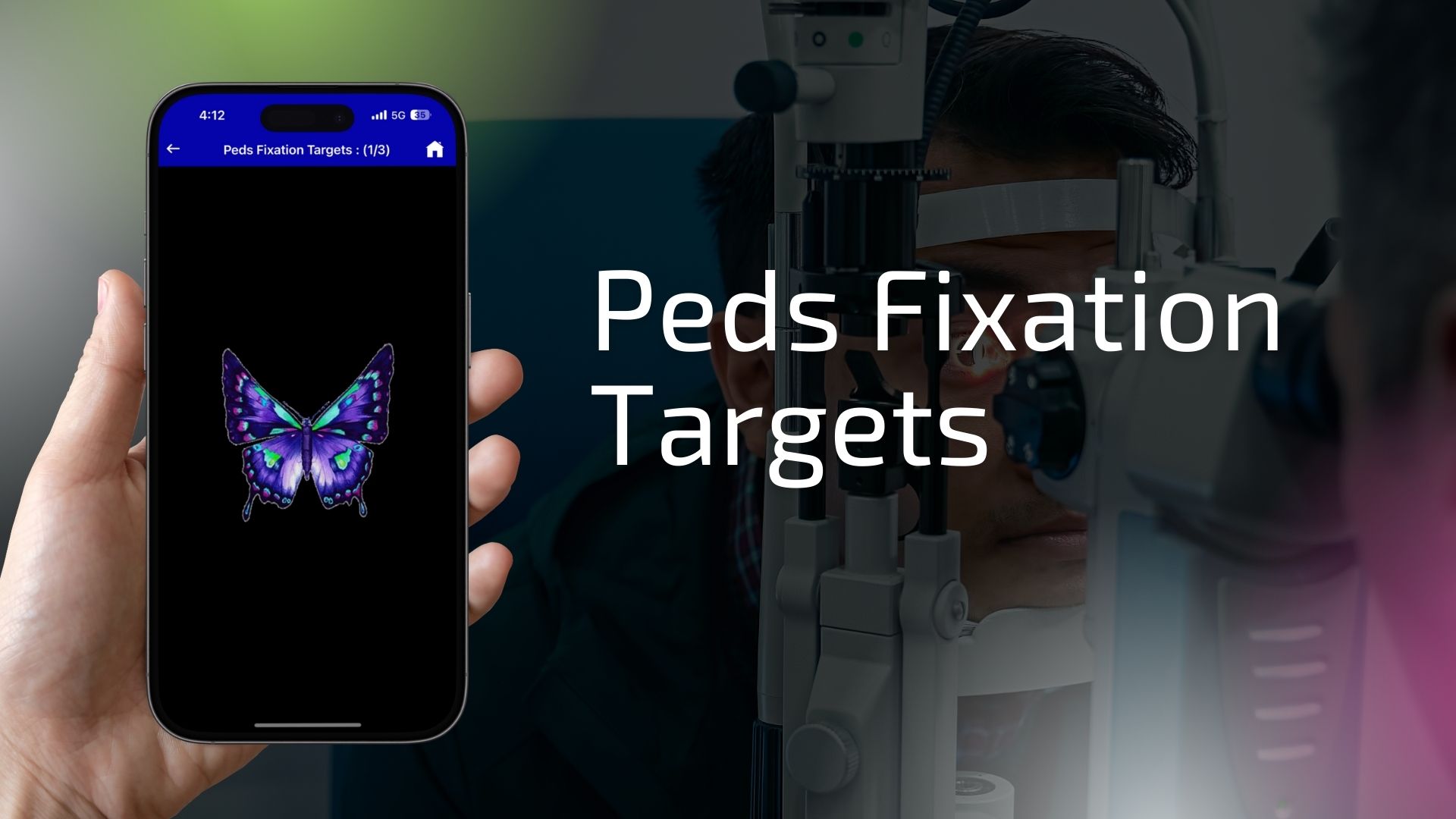
Peds Fixation Targets Eye Test
The Peds Fixation Targets eye test is a specialized tool used
to assess visual fixation and tracking in children. It is
especially useful for kids who cannot communicate well or
follow instructions for standard eye exams. The test uses
simple, engaging visuals to capture and maintain a child's
attention. This allows eye care professionals to observe how
well the eyes fixate on and follow moving targets. Its main
goal is to identify potential visual or neurological issues
early on.
Purpose of the Test
- Assess Fixation:
Determine the child’s
ability to maintain focus on a specific object or
image.
- Evaluate Tracking:
Check how well the
child can follow a moving target with their eyes.
- Identify Visual or Neurological Issues:
Detect any problems related to eye alignment, movement,
or overall visual development.
Setup
- Environment: Conduct
the test in a
quiet, well-lit room where the child can sit
comfortably. Ensure the room is free from distractions
to maintain the child’s attention.
- Equipment: Utilize pediatric-friendly
fixation targets, which may include:
- Brightly Colored, High-Contrast
Images: Easy for
children to see and engage with.
- Simple Shapes or Cartoon
Characters: Attractive
and understandable to young children.
- Toys or Moving Objects: Used to assess tracking
abilities by observing how well the child
follows a moving target.
Procedure
1. Introduction:
Explain the test to the child using simple, reassuring
language. Make it clear that they need to look at or follow
the targets as instructed.
2. Presentation of Targets:
- Static Targets:
Present a stationary
target and observe if the child can fixate on it for a
specified period.
- Dynamic Targets: Move the target slowly
across the child’s field of vision to evaluate their
ability to follow it smoothly with their eyes.
3. Testing Phases:
- Monocular Fixation:
Cover one eye and
present the target to assess fixation ability in each
eye individually.
- Binocular Fixation: Show the target to
both eyes simultaneously to evaluate how well both eyes
work together.
4. Observation Criteria:
- Fixation Stability:
Evaluate whether
the child can maintain steady fixation on the
target.
- Tracking Smoothness:
Assess how
smoothly the child can follow the target with their
eyes.
- Response Time: Observe how quickly the
child responds to the appearance or movement of the
target.
Evaluation
- Normal Results: The
child maintains
fixation and tracks the target accurately with minimal
difficulty.
- Abnormal Results: Difficulty with
fixation or tracking might indicate issues such as
strabismus (eye misalignment), amblyopia (lazy eye), or
other visual or neurological conditions.
Follow-Up
- Referral: If
abnormalities are noted,
the child may be referred to an ophthalmologist or a
pediatric specialist for further evaluation.
- Additional Testing: Depending on the
findings, more comprehensive visual or neurological
tests may be recommended to determine the underlying
cause and appropriate treatment.
The Peds Fixation Targets eye test is a crucial tool in
pediatric eye care, aiding in the early detection of visual
issues and ensuring timely intervention for optimal visual
development.