Glaucoma Risk Calculator

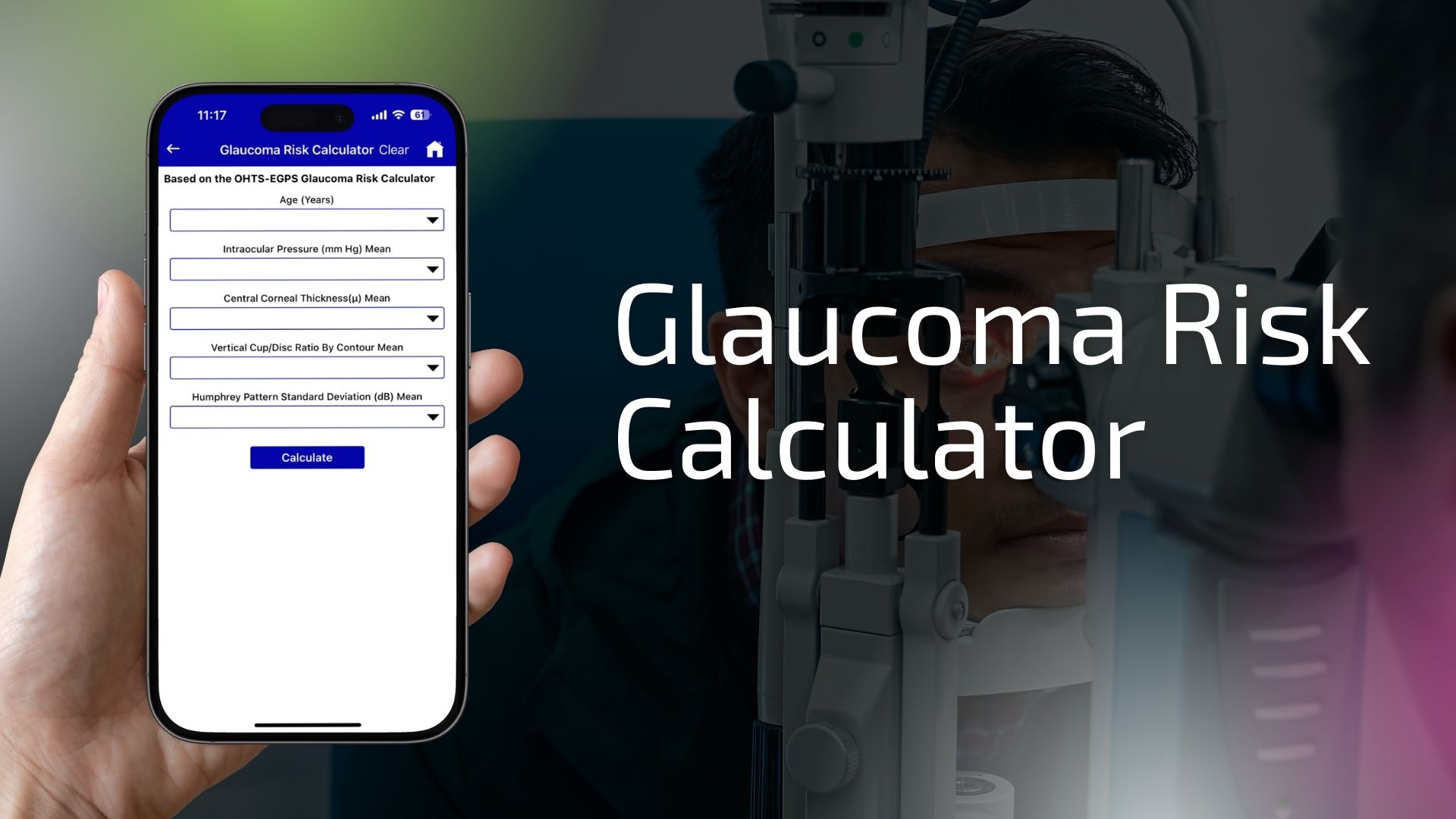
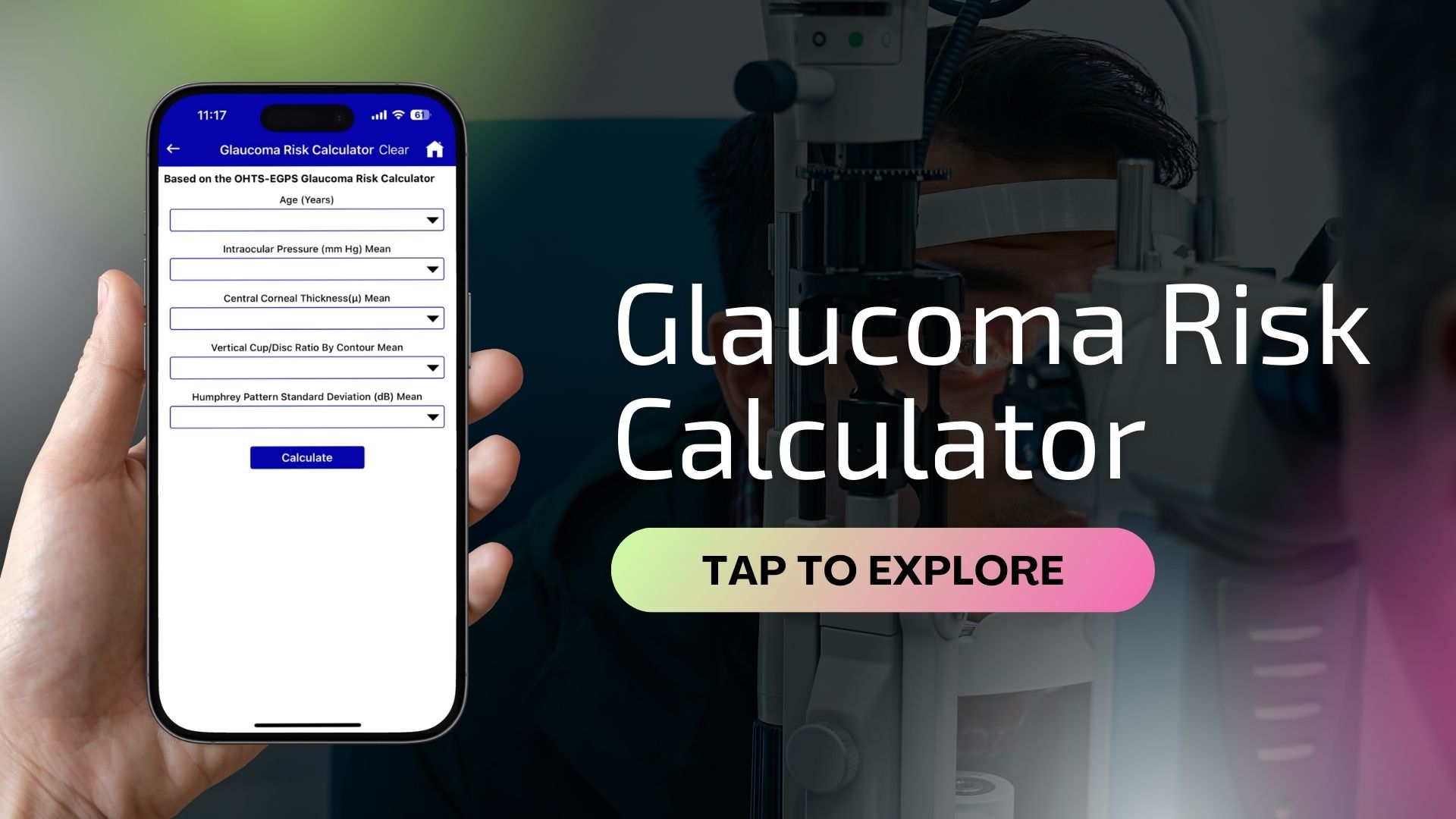
glaucoma risk calculator mobile test image

Comprehensive Overview of Glaucoma Risk Calculator

This Glaucoma Risk Calculator helps estimate an individual's 5-year risk of developing primary open-angle glaucoma (POAG). It is based on data from the Ocular Hypertension Treatment Study (OHTS) and European Glaucoma Prevention Study (EGPS), which have identified several key factors that predict the likelihood of glaucoma development in individuals with ocular hypertension.

Key Factors for Calculation:

The calculator uses the following clinical parameters to estimate the risk:

  • Age (years): Age is an important risk factor. Older individuals are more likely to develop glaucoma due to changes in the eye over time. Example: Age = 65 years
  • Intraocular Pressure (IOP) – Mean (mm Hg): IOP is the primary risk factor for glaucoma. The higher the IOP, the greater the risk of developing damage to the optic nerve. Example: Mean IOP = 25 mm Hg
  • Central Corneal Thickness (CCT) – Mean (µm): CCT is a critical factor in assessing glaucoma risk. Thinner corneas are associated with a higher risk of developing glaucoma. Example: CCT = 540 µm
  • Vertical Cup/Disc Ratio (VCDR) – Mean: The vertical cup-to-disc ratio is used to assess the optic nerve head for signs of glaucomatous damage. Example: VCDR = 0.6
  • Humphrey Visual Field Pattern Standard Deviation (PSD) – Mean (dB): The HVF test is used to detect visual field loss, which is a hallmark of glaucoma. Example: PSD = 1.5 dB

How It Works:

This calculator takes into account these factors and uses a regression model developed through OHTS and EGPS data to calculate the 5-year risk of developing POAG in individuals with ocular hypertension (IOP > 21 mm Hg). It produces a percentage risk of developing glaucoma within 5 years based on these parameters.

Risk Interpretation:

  • Low Risk: < 10% – These patients have a relatively low likelihood of progressing to glaucoma. Regular monitoring is recommended.
  • Moderate Risk: 10% – 20% – These individuals have a moderate chance of developing glaucoma. Consider discussing treatment options.
  • High Risk: > 20% – These patients have a significant probability of developing glaucoma and may benefit from earlier intervention.

Clinical Significance:

This calculator is a screening tool designed to assist healthcare professionals in making informed decisions about patient management. It does not replace clinical judgment. Additional factors such as family history, race/ethnicity, and other health conditions should also be considered.

Notes for Use:
Ocular Hypertension (OHT) is diagnosed when a person has IOP >21 mm Hg but does not yet show signs of glaucomatous damage (e.g., optic nerve changes or visual field defects). This calculator assumes the patient has no current glaucoma and only ocular hypertension. Regular monitoring of IOP, visual fields, and optic nerve health is essential for patients at risk of glaucoma.

Example Calculation:

Let’s say a patient is 65 years old with the following results:

  • Age: 65 years
  • Mean IOP: 25 mm Hg
  • CCT: 540 µm
  • VCDR: 0.6
  • Humphrey PSD: 1.5 dB

Using these inputs, the calculator might return a 5-year risk of 18%, indicating moderate risk for glaucoma.