Scan QR code to download the
application.
Color Vision Test Overview
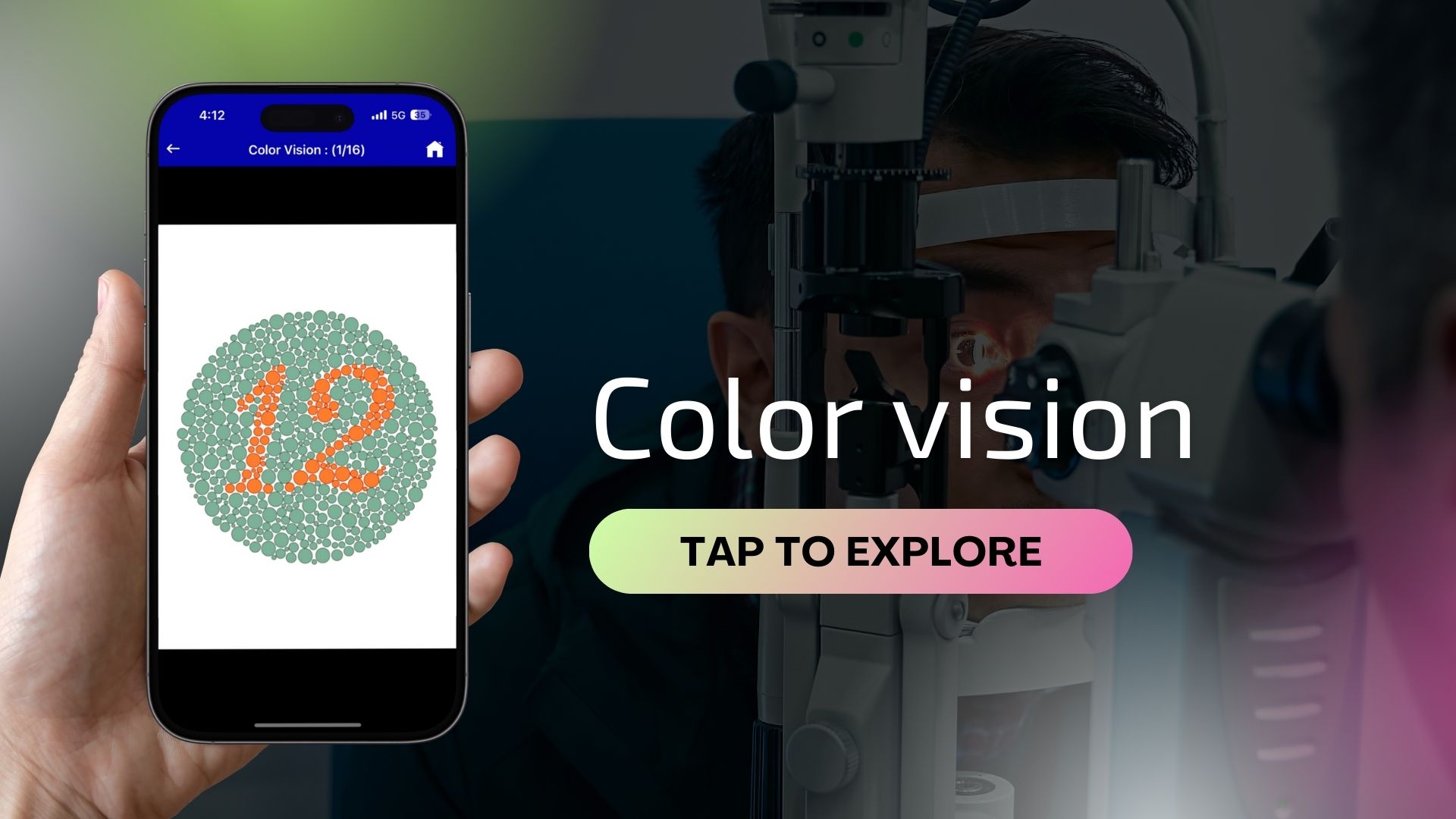
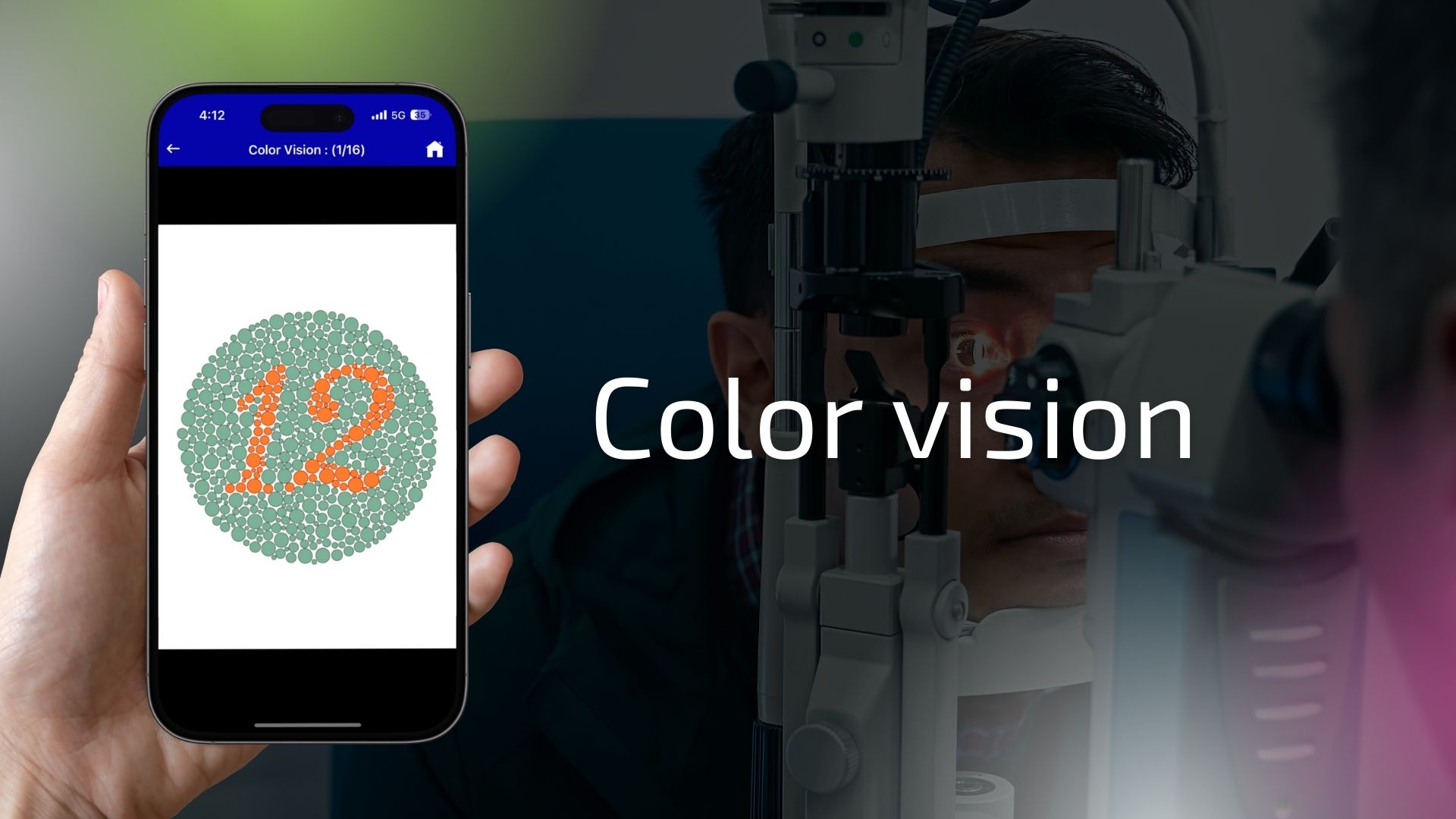
The most widely used method for detecting color vision
deficiencies is the Ishihara test, which involves a series
of specially designed plates known as Ishihara plates. Each
plate features a circle made up of many small, colored dots
that vary in hue and brightness. Within this pattern, a
number or shape is embedded using dots of a slightly
different color. Individuals with normal color vision can
easily identify the hidden figure, while those with color
vision deficiencies may see a different figure or none at
all. The test is especially effective in detecting red-green
color blindness, the most common type. It is typically
administered under proper lighting conditions and without
strict time limits, ensuring accurate results. The
simplicity of the test makes it easy to use, while its
accuracy makes it a trusted tool in clinical assessments. By
interpreting the shapes or numbers a person can or cannot
see, professionals can determine the presence and severity
of a color vision deficiency.
How the Color Vision Test Works:
1. Test Setup:
- You will be shown a series of plates or circles filled
with various colored dots.
- Each plate contains a pattern or shape, such as a
number, letter, or squiggly line, made up of dots in
different colors.
2. Performing the Test:
- View the Plate: Look at each plate
closely. The shapes or numbers within the colored dots
are designed to be distinguishable based on color.
- Identify the Shape: Your task is to
identify the shape, number, or letter that is formed by
the colored dots.
3. Interpreting Results:
- If the shape or number within the circle blends into the
background and is not visible to you, it may indicate a
color vision deficiency.
- The test is designed to detect various types of color
vision deficiencies, such as red-green color blindness
or other forms.
4. Different Types of Plates:
- Ishihara Plates: These
are the most
commonly used and are designed to identify red-green
color deficiencies.
- Other Color Plates: Various other
plates and tests can identify different types of color
deficiencies, including blue-yellow color blindness and
total color blindness.
What Color Vision Deficiencies Mean:
- Red-Green Color
Deficiency: Difficulty
distinguishing between red and green hues.
- Blue-Yellow Color
Deficiency:
Difficulty distinguishing between blue and yellow
hues.
- Total Color Blindness: Inability to see
any color, only shades of gray.
Note: If you suspect a color vision deficiency, it's
important to consult with an eye care professional for a
comprehensive evaluation and to understand the implications
for daily activities and career options.