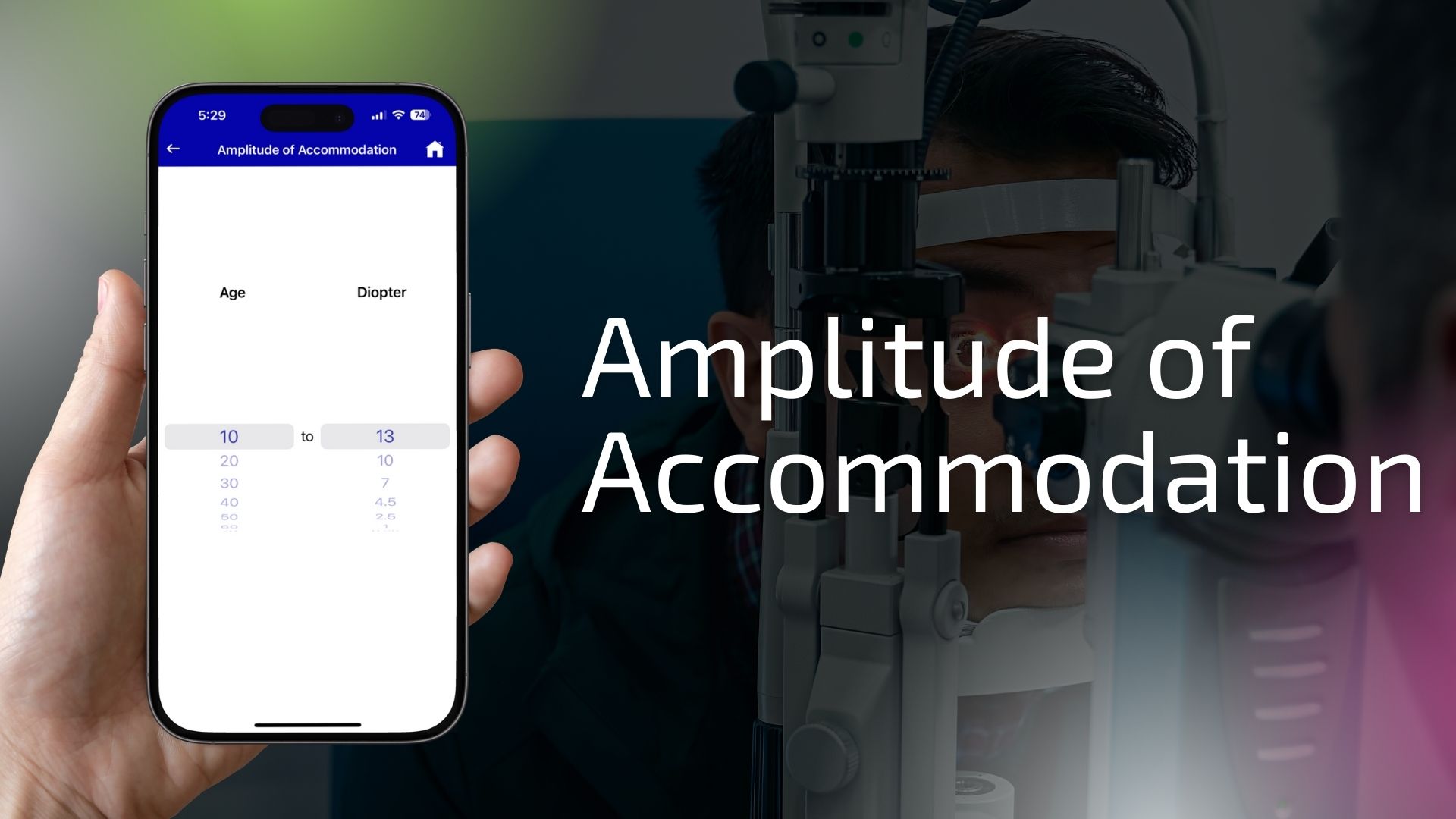

The Amplitude of Accommodation (AA) is an important concept in vision science. It refers to the eye's maximum ability to shift focus from far to near objects. This dynamic focusing process plays a critical role in maintaining visual clarity. The mechanism involves a coordinated effort by the eye's internal structures. Specifically, the ciliary muscles contract to change the shape of the crystalline lens. This change in lens curvature allows light to properly focus on the retina. When we look at something up close, this system works harder to maintain clarity. As we age, the amplitude of accommodation typically decreases, leading to presbyopia. Understanding AA is crucial in diagnosing and managing certain visual conditions. Overall, AA ensures that we can see clearly at varying distances throughout our lives.
Accommodation Process: When focusing on a near object, the ciliary muscle contracts, causing the lens to become more convex and increase its refractive power. This change enables the eye to focus on close objects.
Age-Related Changes: As we age, the lens becomes less flexible, reducing the ability to change shape and decreasing the amplitude of accommodation. This leads to the condition known as presbyopia.
Amplitude is typically measured in diopters (D), and common clinical tests include:
Presbyopia: A natural, age-related condition where the eye's accommodation ability diminishes. It typically starts becoming noticeable around age 40 and is not a refractive error, but a physiological limitation.
Correction Methods:
For example, at age 40:
Average AA = 18.5 – (0.3 × 40) = 6.5 D
| Age (Years) | Average Amplitude (D) |
|---|---|
| 10 | ~14 D |
| 20 | ~10 D |
| 30 | ~7 D |
| 40 | ~4.5 D |
| 50 | ~2.5 D |
| 60+ | ~1 D or less |
The Amplitude of Accommodation is essential for focusing on near objects, with its ability to change with age, refractive errors, and health conditions. It is measured through various clinical methods and is a key factor in diagnosing accommodative disorders like presbyopia. As accommodation naturally declines with age, corrective options like reading glasses or multifocal lenses become necessary to maintain near vision.