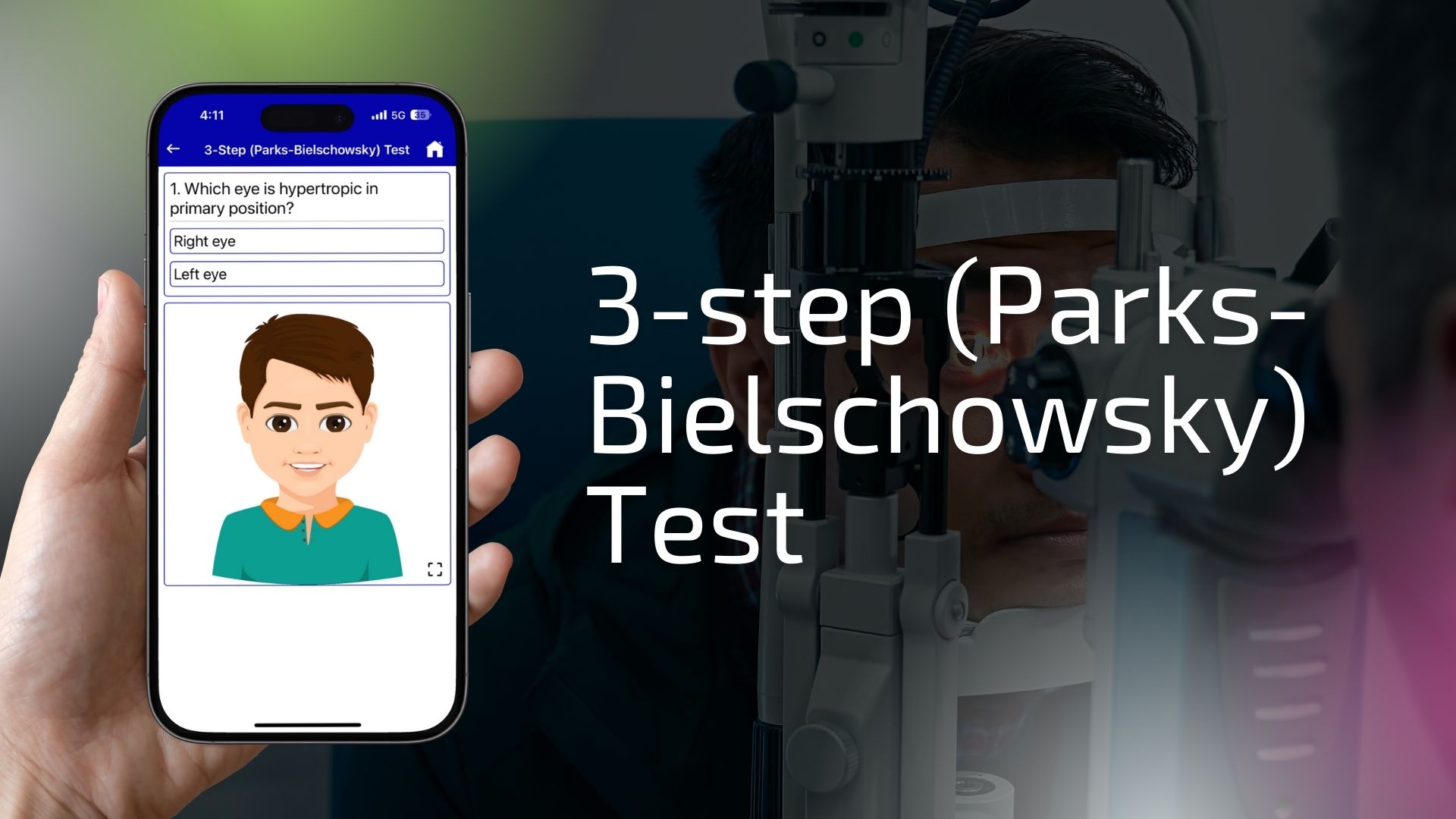
The 3-Step Parks-Bielschowsky Test is a valuable method used to evaluate ocular motility and assess for neurological disorders affecting eye movement. It involves three key steps: observing the patient’s eye movements while performing specific head positions and eye rotations. The test helps in diagnosing conditions like gaze palsies, nystagmus, or other abnormal eye movements. By assessing the eye’s response to various positions, healthcare professionals can determine if the issue is related to a neurological problem or a more localized ocular condition. This simple yet effective test provides valuable insights into the patient's eye health and neurological function.